How Supermarkets Source Bagasse Containers for Retail & Catering Supply

Introduction (Featured Snippet Optimized)

Supermarkets source Bagasse containers as a compliant, compostable packaging solution for fresh food, ready meals, deli products, and institutional catering supply chains.

Unlike traditional plastic or coated paper packaging, bagasse is derived from sugarcane fiber and is widely accepted in global retail procurement due to its sustainability, regulatory compliance, and operational efficiency.

Today, supermarket sourcing decisions are based not only on cost, but on compliance, branding capability, and supply chain reliability.
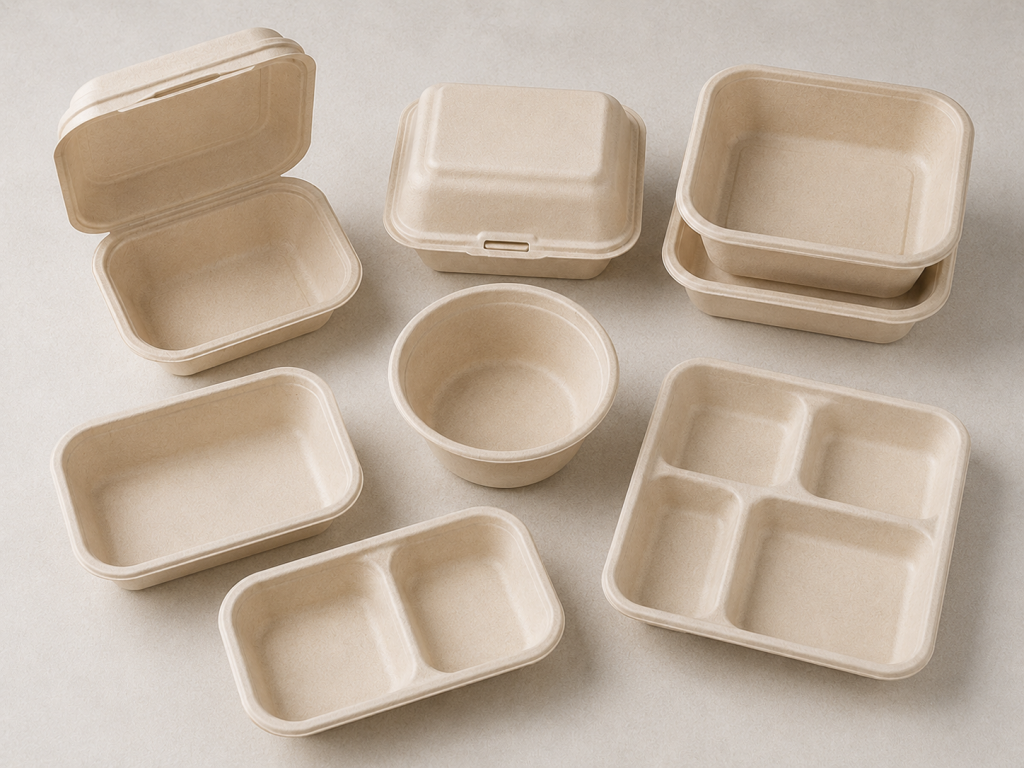
Β 

Bagasse meal prep containers with healthy supermarket ready meals and fresh food

🟒 Why Supermarkets Source Bagasse Containers

Supermarkets are rapidly shifting toward bagasse packaging due to three global drivers:

1. Regulatory compliance pressure

Plastic reduction laws and PFAS restrictions are forcing retailers to adopt fiber-based packaging solutions that meet compostability standards.

2. Retail sustainability targets

Supermarket own-label programs must meet ESG reporting requirements and reduce environmental footprint across packaging categories.

3. Consumer preference shift

Consumers increasingly associate compostable packaging with higher product quality and environmentally responsible brands.

🟒 How Supermarkets Source Bagasse Containers (Step-by-Step Process)

Supermarket procurement is a structured sourcing system, not a simple purchasing decision.

Step 1 β€” Supplier screening

Retail buyers identify manufacturers capable of:

  • stable production capacity
  • export experience
  • compliance documentation readiness

Step 2 β€” Compliance verification

Suppliers must provide:

  • compostability certifications
  • food contact safety reports
  • regional regulatory compliance documents

Step 3 β€” Sample evaluation

Packaging is tested for:

  • strength and durability
  • grease resistance
  • heat performance
  • visual branding suitability

Step 4 β€” Commercial approval

Retail procurement teams evaluate:

  • pricing structure
  • supply consistency
  • private label capability
  • logistics feasibility

Step 5 β€” Full-scale rollout

Approved suppliers are integrated into:

  • supermarket own-label programs
  • regional distribution networks
  • institutional catering supply chains

🟒 Certification Requirements for Supermarket Supply

Certification is the most critical gate in supermarket procurement.

Β United States

  • compostability certification (industry-recognized systems)
  • FDA food contact compliance
  • PFAS-free documentation (increasing requirement)

UK & EU

  • EN13432 industrial compostability standard
  • recognized compostability certification marks
  • food contact safety compliance

Australia

  • AS4736 / AS5810 compostability standards
  • APCO packaging compliance alignment

πŸ‘‰ Without verified certification, products cannot enter retail supply chains.

🟒 Private Label & Supermarket Own-Label Packaging

Supermarket own-label programs require full packaging customization, not just product supply.

Branding capabilities include:

  • printed logo packaging (single or multi-color)
  • embossed branding for premium retail positioning
  • category-based visual identity systems

Retail compliance integration:

  • barcode (EAN/UPC) integration
  • material and sustainability labeling
  • certification mark placement
  • shelf-ready packaging (SRP) design

This enables seamless integration into supermarket private label systems.

🟒 Supply Chain Requirements for Retail Buyers

Supermarkets require suppliers with stable, scalable, and predictable supply systems.

Key requirements:

Production capability

  • multi-SKU manufacturing support
  • consistent mass production output
  • repeat order stability

Quality control

  • batch consistency monitoring
  • grease resistance stability
  • dimensional uniformity

Documentation system

  • export documentation
  • compliance certificates
  • test reports for each shipment

Logistics efficiency

  • container-level shipping optimization
  • predictable lead times
  • cost-efficient distribution planning

🟒 Institutional Catering Applications

Beyond retail, bagasse containers are widely used in institutional catering systems.

Key sectors include:

  • healthcare food service systems
  • airline catering operations
  • university and school dining programs
  • corporate cafeteria systems

Key requirements:

  • standardized portion control
  • high-volume consistency
  • hygiene compliance
  • heat and cold resistance stability

Institutional buyers prioritize consistency and reliability over branding.

🟒 Supplier Evaluation Checklist

Supermarket procurement teams evaluate suppliers using strict qualification criteria:

  1. certification authenticity verification
  2. traceable testing reports
  3. factory audit documentation (ISO / BRCGS)
  4. production scalability assessment
  5. long-term supply reliability

πŸ‘‰ Suppliers without verifiable compliance systems are typically excluded from consideration.

🟒 Key Challenges in Supermarket Procurement

Supermarket sourcing teams commonly face:

  • inconsistent supplier certification quality
  • supply chain instability in peak demand seasons
  • lack of private label capability from suppliers
  • regulatory complexity across multiple regions

This is why long-term partnerships are preferred over transactional sourcing.

🟒 Why Bagasse Has Become a Global Standard

Bagasse containers have transitioned from alternative eco packaging to a global retail standard material.

This shift is driven by:

  • global plastic reduction policies
  • ESG-driven procurement strategies
  • supermarket private label expansion
  • institutional catering modernization

🟒 FAQ (SEO + AI Overview Optimized)

What are bagasse containers used for in supermarkets?

They are used for fresh food packaging, ready meals, deli sections, and private label food products in retail and catering supply chains.


Why do supermarkets source bagasse containers?

Because they meet compostability regulations, support sustainability goals, and integrate into supermarket own-label packaging systems.


Are bagasse containers compliant globally?

Yes, but they must meet regional standards such as EN13432 (EU/UK), FDA requirements (US), and AS4736 (Australia).


Can bagasse containers be used for hot food?

Yes, they are widely used for hot food applications in both retail and institutional catering systems.


What is the main factor in supermarket supplier selection?

The key factors are certification compliance, supply chain stability, and private label capability.

🟒 Conclusion

Bagasse containers are now a core packaging category in global supermarket procurement systems.

Supermarket sourcing is not product-drivenβ€”it is a structured procurement process based on compliance, branding capability, and supply chain execution.

Suppliers that succeed in this market are those who can deliver:

  • certified compliance across regions
  • scalable production systems
  • private label customization
  • reliable global logistics support

As global regulations continue tightening, bagasse packaging will remain a standard requirement in supermarket retail and institutional catering supply chains.

Newsletter Updates

Enter your email address below and subscribe to our newsletter

Leave a Reply

Your email address will not be published. Required fields are marked *