Address
304 North Cardinal
St. Dorchester Center, MA 02124
Work Hours
Monday to Friday: 7AM - 7PM
Weekend: 10AM - 5PM
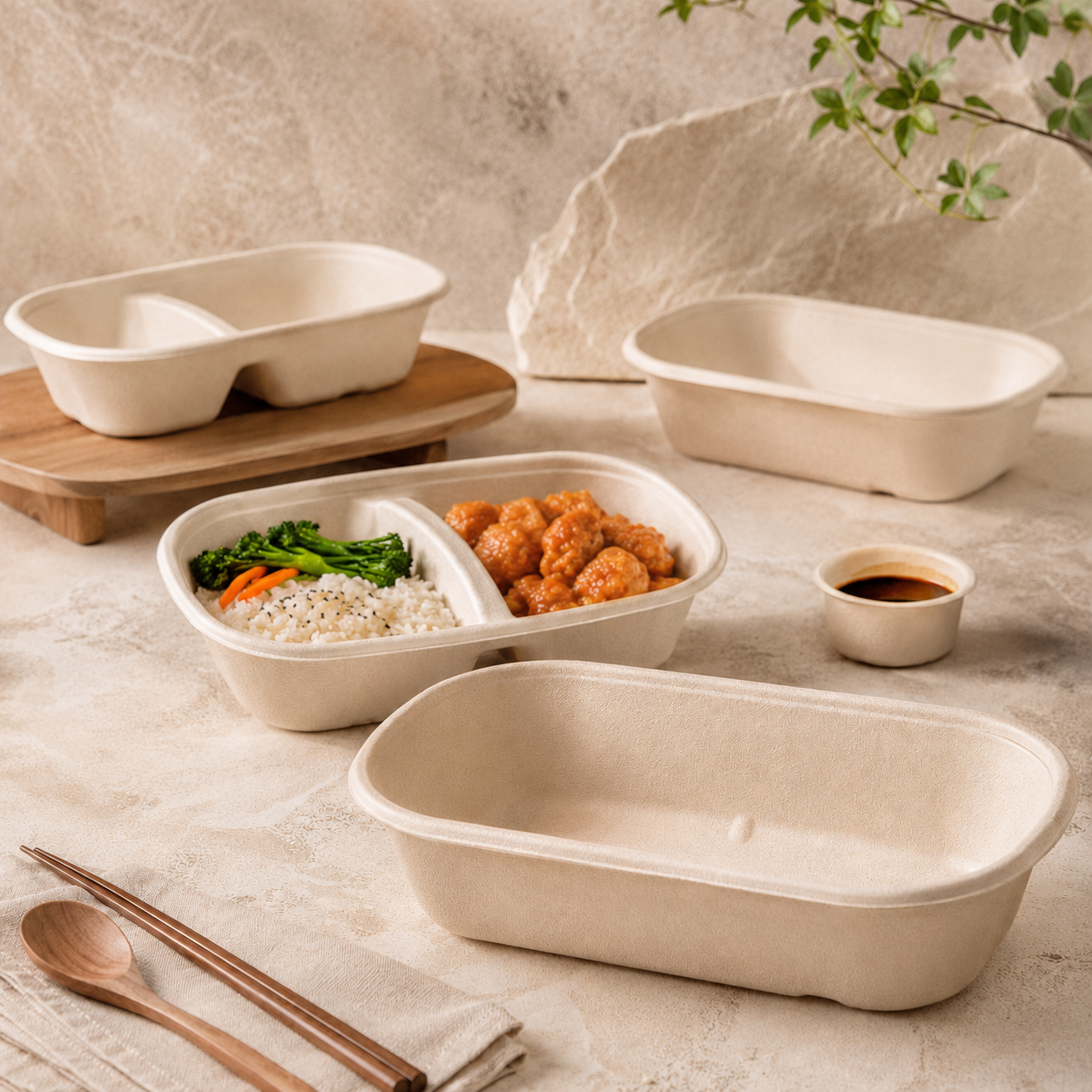
Choosing the right bagasse container size is not only about selecting a larger or smaller food box. For restaurants, takeaway operators, food distributors and packaging wholesalers, the correct container also affects portion control, food presentation, packing efficiency and customer experience.
Bagasse food containers are available in different capacities and compartment layouts. A 700ml container may work well for a standard individual meal, while an 850ml or 1000ml container provides more space for larger portions, combination meals or food delivery menus.
This comparison looks at three practical capacities—700ml, 850ml and 1000ml—and explains when to choose a single compartment or two compartment bagasse food container.
| Capacity | Available structure | Recommended food applications | Portion level |
|---|---|---|---|
| 700ml | Single compartment or two compartment | Rice meals, noodles, salads, light lunches | Standard individual portion |
| 850ml | Single compartment or two compartment | Main meals, curry and rice, pasta, takeaway combinations | Medium to large portion |
| 1000ml | Single compartment or two compartment | Large takeaway meals, catering portions, mixed dishes | Large or complete meal portion |
Capacity is an important starting point, but buyers should also consider the shape of the food, the number of meal components and whether ingredients need to remain separated.
A 700ml bagasse food container is suitable for standard individual portions. It offers enough capacity for many everyday takeaway meals without creating excessive unused space inside the package.
The single compartment version provides one open packing area. It is suitable for meals that can be mixed together or arranged within the same section.
Common applications include:
A single compartment structure gives food businesses greater flexibility when placing ingredients. It is especially useful for dishes where sauces, toppings and side ingredients are intended to be combined.
The 700ml size can also help restaurants maintain more consistent serving portions. For takeaway menus with several container sizes, it can be positioned as the standard or regular meal option.
The two compartment version is better for meals that require basic food separation. The divider can help keep rice away from vegetables, curry, meat or side dishes during packing and transportation.
Suitable meal combinations include:
This size is appropriate when buyers need a divided container but do not require the capacity of a larger 850ml or 1000ml box.
Recommended for: cafés, light meal brands, school meal suppliers, small takeaway portions and portion-controlled menus.
An 850ml bagasse food container sits between the compact 700ml option and the larger 1000ml size. It is one of the most flexible capacities for restaurants and food delivery businesses because it can accommodate a complete individual meal without appearing oversized.
The open interior provides space for meals with larger ingredients or mixed dishes. Compared with the 700ml container, the additional capacity allows restaurants to pack more rice, noodles, vegetables or protein.
Typical applications include:
The 850ml single compartment container is a practical choice for food businesses that find 700ml too small but do not need a full 1000ml container.
It can also provide more room for food presentation. Ingredients can be arranged more clearly, which may be useful for premium takeaway meals, salads and prepared dishes.
The divided 850ml version works well for complete meal sets that contain two main components.
For example, one section can hold rice or noodles, while the second section holds curry, meat, vegetables or another side dish. This reduces direct mixing before the customer opens the package.
Common uses include:
For many restaurants, 850ml offers a good balance between portion capacity and packaging efficiency. It provides more room than a 700ml container while remaining suitable for standard individual orders.
Recommended for: restaurants, food delivery brands, meal-prep companies, supermarkets and catering suppliers.
A 1000ml bagasse food container is designed for larger meals and generous individual portions. It can also be used for selected sharing dishes, depending on the food type and container dimensions.
The single compartment structure is suitable for large-volume dishes that need one uninterrupted packing area.
Possible applications include:
This format is useful when food items are bulky or difficult to fit into smaller divided sections. It also gives kitchen staff more flexibility when arranging different ingredients inside the container.
A 1000ml single compartment container may be positioned as a large, premium or extra-portion option on a restaurant menu.
The two compartment version combines larger capacity with food separation. It is suitable for full meal combinations where the main food and side dish should remain in different sections.
Common meal formats include:
This option is particularly useful for menus containing sauces or strongly flavored side dishes. Separating the ingredients can improve presentation and help the customer control when the food is mixed.
Recommended for: large takeaway portions, catering businesses, full dinner meals, supermarket ready meals and food service distributors.
Choosing between single and two compartment containers depends on the structure of the meal rather than capacity alone.
A single compartment bagasse container is more suitable when:
A two compartment bagasse container is more suitable when:
Food businesses should test containers with their actual menu items before placing a large order. Capacity numbers alone do not always show how effectively a meal will fit, because food density and container dimensions also affect usable space.
Before ordering bagasse food containers wholesale, buyers should evaluate several practical factors.
Compare the container capacity with the restaurant’s actual serving weight. A container that is too large may make a normal portion look small, while an undersized container may cause overfilling or difficulty closing the package.
Single-dish menus usually work well with single compartment containers. Combination meals, rice sets and curry meals may benefit from two compartment designs.
Dry, oily, wet and sauce-based foods place different demands on takeaway packaging. Buyers should request samples and test them using the same foods, temperatures and holding times used in daily operations.
Different container sizes affect carton dimensions, warehouse space and shipping efficiency. Distributors should compare pieces per carton, carton measurements and loading quantities before confirming bulk orders.
Where separate lids are required, confirm that the container and lid dimensions match correctly. The container supplier should clearly identify which lid is compatible with each model.
For standard individual meals, the 700ml bagasse container is usually the most economical and space-efficient option.
For regular restaurant portions and flexible takeaway menus, the 850ml bagasse container offers a balanced middle size.
For large meals, catering portions and complete food combinations, the 1000ml bagasse container provides greater packing capacity.
The compartment structure should then be selected according to the meal:
Many distributors stock more than one capacity so their customers can select containers according to menu size and price level.
A 700ml container is suitable for many standard individual meals, including rice, noodles, pasta and salads. Larger restaurant portions may require an 850ml or 1000ml container.
The 850ml size is often the most flexible because it fits medium and relatively large individual meals without occupying as much space as a 1000ml container.
Two compartment containers are useful when rice needs to be separated from curry, meat, vegetables or sauces. For mixed rice dishes, a single compartment container may be sufficient.
Wholesalers serving different restaurants and takeaway businesses can benefit from stocking 700ml, 850ml and 1000ml options. This provides coverage for standard, medium and large meal portions.
The right bagasse container depends on portion size, food type and meal structure.
A 700ml container is suitable for lighter and standard portions, an 850ml container offers greater flexibility for complete individual meals, and a 1000ml container supports large portions and catering applications. Single compartment containers provide an open packing area, while two compartment containers help separate different meal components.
By comparing capacity, structure, lid compatibility, carton packing and actual food performance, buyers can select a bagasse packaging range that better matches their customers’ takeaway and food delivery requirements.
Enter your email address below and subscribe to our newsletter