Biodegradable tableware refers to disposable food service products made from natural, renewable, or plant-based materials that can break down through biological processes over time. Unlike traditional plastic tableware, which is made from petroleum-based materials and can remain in the environment for hundreds of years, biodegradable tableware is designed to reduce plastic waste and provide a more sustainable option for food packaging.
With the increasing demand for environmentally responsible products, many restaurants, catering companies, supermarkets, and food service businesses are adopting biodegradable tableware as an alternative to conventional disposable products.
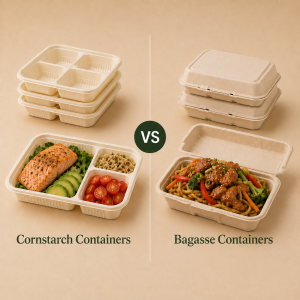
Common biodegradable tableware materials include bagasse, cornstarch, bamboo fiber, and palm leaf. Among these options, bagasse tableware and cornstarch tableware have become widely used in modern sustainable food packaging because they combine environmental benefits with practical food service performance.
What Materials Are Used in Biodegradable Tableware?
Biodegradable tableware can be produced from different natural materials. Each material has unique characteristics and applications.
| Material | Source | Common Products | Features |
|---|---|---|---|
| Bagasse | Sugarcane fiber | Food containers, plates, bowls, trays | Strong, lightweight, heat resistant |
| Cornstarch | Plant starch | Containers, trays, packaging products | Renewable and plant-based |
| Bamboo Fiber | Bamboo pulp | Bowls, cups, plates | Natural appearance and durable |
| Palm Leaf | Fallen palm leaves | Plates and serving trays | Natural texture and chemical-free |
Among these materials, bagasse and cornstarch are two of the most common choices for commercial food packaging because they are suitable for restaurants, takeaway businesses, catering services, and ready meal applications.
Bagasse Tableware: Made From Sugarcane Fiber
What Is Bagasse Tableware?
Bagasse tableware is made from sugarcane fiber, a natural by-product created after extracting juice from sugarcane. Instead of being discarded as agricultural waste, sugarcane fiber can be processed into disposable food containers, plates, bowls, and trays.
As a renewable plant-based material, bagasse has become one of the most popular options for biodegradable food packaging.
Compared with traditional plastic containers, bagasse products provide a more natural alternative while maintaining the strength required for daily food service applications.
Common Applications of Bagasse Tableware
Bagasse food packaging is widely used for:
- Takeaway meals
- Rice and curry dishes
- Fried foods
- Salads
- Catering events
- Ready-to-eat meals
Its strong structure and resistance to moisture make it suitable for both hot and cold foods.
For businesses looking for alternatives to plastic packaging, sugarcane tableware provides a practical solution that supports sustainable packaging goals.
Cornstarch Tableware: A Plant-Based Alternative
What Is Cornstarch Tableware?
Cornstarch tableware is made from plant-based starch materials, mainly derived from corn. Through processing technology, cornstarch can be transformed into food packaging products such as containers, trays, and disposable tableware.
As a renewable resource, cornstarch provides another option for businesses interested in reducing the use of petroleum-based plastic packaging.
Where Is Cornstarch Tableware Used?
Cornstarch containers are commonly used in:
- Supermarket ready meals
- Meal preparation packaging
- Food storage
- Catering services
- Takeaway applications
Because of its lightweight structure and plant-based origin, cornstarch tableware has become an important part of modern eco friendly food packaging solutions.
What Are the Benefits of Biodegradable Tableware?
1. Reduces Plastic Waste
One of the main advantages of biodegradable tableware is reducing dependence on traditional plastic products.
Plastic packaging has been widely used because of its durability and low production cost. However, long-lasting plastic waste has created environmental challenges worldwide.
Plant-based alternatives such as bagasse and cornstarch tableware help reduce the amount of conventional plastic used in food service industries.
2. Made From Renewable Materials
Many biodegradable tableware products are produced from renewable resources, including agricultural fibers and plant starch.
Examples include:
- Sugarcane fiber
- Corn starch
- Bamboo pulp
- Natural plant materials
These renewable materials provide a more sustainable approach to disposable food packaging.
3. Suitable for Modern Food Service Applications
Biodegradable tableware is designed to meet the needs of different food businesses.
Common applications include:
- Restaurants
- Cafes
- Food delivery services
- Catering companies
- Supermarkets
- Events
Different designs, sizes, and product formats allow businesses to replace traditional disposable packaging with more sustainable options.
| Feature | Biodegradable Tableware | Plastic Tableware |
|---|---|---|
| Main material | Plant-based materials | Petroleum-based materials |
| Renewable resources | Yes | No |
| Environmental impact | Lower | Higher |
| Appearance | Natural appearance | Plastic appearance |
| Common use | Sustainable food packaging | Traditional disposable packaging |
Biodegradable tableware does not simply replace plastic in every application, but it provides an alternative solution for industries looking to reduce environmental impact.
Biodegradable Tableware vs Compostable Tableware
Although these two terms are often used together, they have different meanings.
Biodegradable
Biodegradable products can naturally break down through biological processes over time.
Compostable
Compostable products are designed to break down under specific composting conditions and become compost material.
Some biodegradable tableware products may also be compostable depending on their material composition and certification requirements.
Understanding the difference helps businesses and consumers make more informed decisions when selecting sustainable packaging products.
Where Is Biodegradable Tableware Used?
Biodegradable tableware is becoming increasingly common across different industries.
Restaurants and Takeaway Businesses
Food containers made from bagasse are commonly used for:
- Rice meals
- Curry dishes
- Fried food
- Delivery orders
Catering and Events
Disposable plates, trays, and bowls provide convenient solutions for large-scale food service.
Supermarkets and Ready Meals
Plant-based containers are increasingly used for prepared food packaging and meal solutions.
The Future of Biodegradable Tableware
As environmental awareness continues to grow, biodegradable tableware is expected to play a larger role in the future of food packaging.
Businesses are increasingly looking for packaging solutions that balance:
- Food safety
- Product performance
- Environmental responsibility
- Consumer expectations
Materials such as bagasse and cornstarch will continue to be important choices for sustainable food packaging because they offer renewable alternatives to traditional plastic products.
Conclusion
Biodegradable tableware is a sustainable alternative to traditional disposable plastic products. Made from renewable materials such as sugarcane fiber, cornstarch, bamboo, and other plant-based resources, it helps reduce plastic waste while meeting the needs of modern food service industries.
Among various options, bagasse tableware and cornstarch tableware have become popular choices for restaurants, catering businesses, supermarkets, and food packaging companies.
As the demand for sustainable food packaging continues to increase, biodegradable tableware will remain an important solution for creating a more environmentally responsible food industry.