Paper Cup Sizes Explained: A Simple Guide from 4 oz to 32 oz
Choosing the right paper cup size can be confusing. A cup may be labelled 8 oz, 12 oz or 16 oz, but what does that mean in millilitres, and which drinks are best suited to each size?
This guide explains the most common paper cup sizes from 4 oz to 32 oz, including their approximate metric capacities, typical uses and important points to check when choosing matching lids.
Quick Answer
The most common paper cup sizes are:
- 4 oz: espresso and samples
- 6–8 oz: flat white, cappuccino and small coffee
- 10–12 oz: regular coffee, latte and tea
- 16 oz: large hot drinks and standard iced drinks
- 20–24 oz: smoothies, bubble tea and large cold drinks
- 32 oz: extra-large cold drinks and event beverages
Exact dimensions and usable capacity may vary between manufacturers.
Paper Cup Size Chart
| Cup Size | Approximate Capacity | Common Uses |
|---|---|---|
| 4 oz | 120 ml | Espresso, tasting samples |
| 6 oz | 180 ml | Flat white, cortado, short latte |
| 8 oz | 240 ml | Cappuccino, small latte, coffee |
| 10 oz | 300 ml | Medium coffee, tea |
| 12 oz | 355 ml | Latte, Americano, hot chocolate |
| 14 oz | 415 ml | Large coffee and speciality drinks |
| 16 oz | 475–480 ml | Large hot drinks, iced coffee |
| 20 oz | 590–600 ml | Extra-large takeaway drinks |
| 22 oz | 650 ml | Smoothies, bubble tea |
| 24 oz | 710 ml | Large iced drinks |
| 32 oz | 950 ml | Extra-large cold drinks and events |
These capacities are approximate. Cup height, base diameter, rim diameter and brim capacity can vary depending on the cup shape, wall construction and manufacturing mould.
How Paper Cup Sizing Works
Paper cup sizes are normally shown in fluid ounces, abbreviated as “oz”. The ounce measurement describes the cup’s nominal capacity.
However, the labelled capacity is not always the same as the amount of beverage that should be poured into the cup. Space may be needed for foam, ice, milk, toppings and a fitted lid.
For example, a 12 oz paper cup represents approximately 355 ml. The actual brim capacity may be slightly higher, but the recommended serving volume depends on the drink and how much space is required at the top.
When comparing paper cups, businesses should check more than the ounce size. Important specifications include:
- Nominal capacity
- Brim capacity
- Cup height
- Rim diameter
- Top and bottom diameter
- Suitable lid type
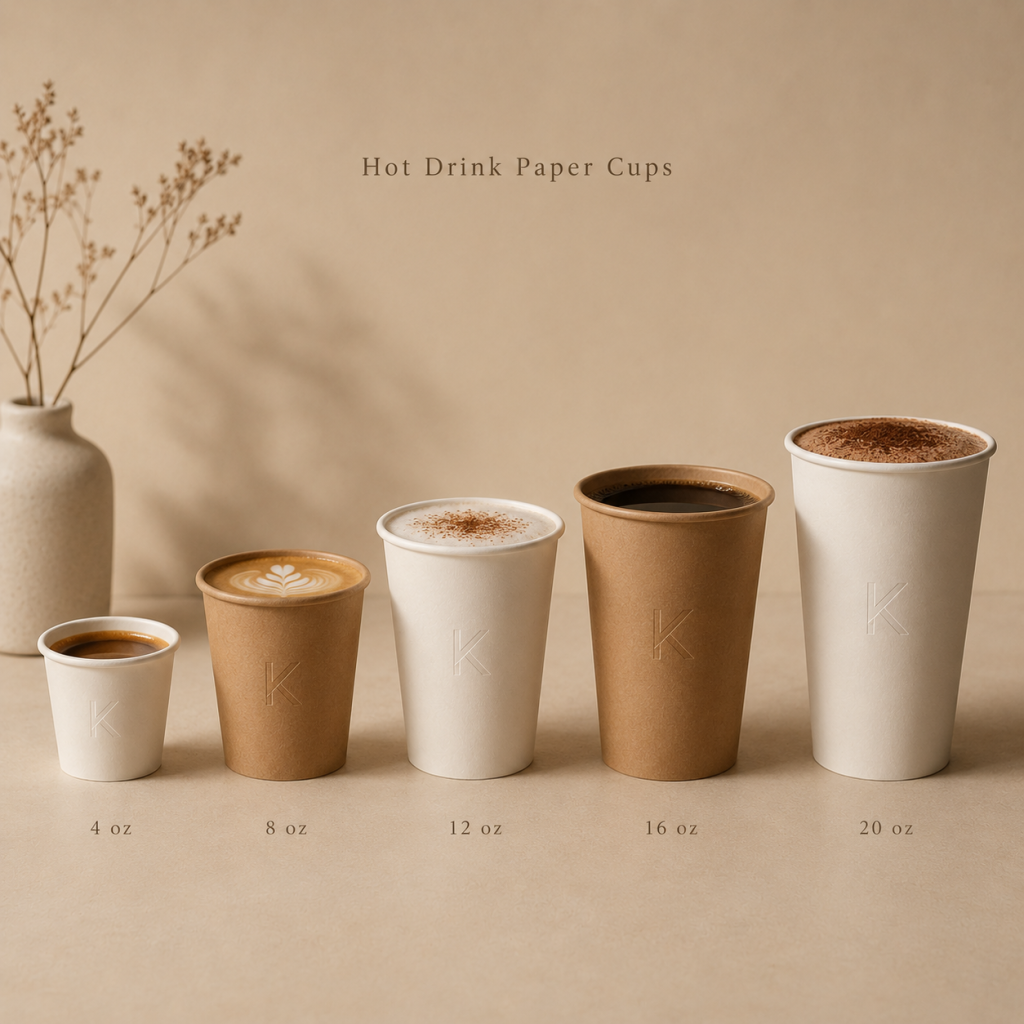
Common Paper Cup Sizes for Hot Drinks
4 oz
A 4 oz cup is mainly used for espresso, coffee tasting, product sampling and small portions. It is commonly seen in cafés, exhibitions, supermarkets and food sampling events.
6 oz and 8 oz
These sizes are popular for smaller coffee servings.
A 6 oz cup works well for flat whites, cortados and short lattes. An 8 oz cup is commonly used for cappuccino, small latte, coffee and tea.
For many independent cafés, the 8 oz cup is one of the most practical everyday sizes.
10 oz and 12 oz
A 10 oz cup is suitable for medium coffee and tea, while a 12 oz cup is widely used for latte, Americano, hot chocolate and regular takeaway drinks.
Businesses that want to offer only a small number of sizes often choose 8 oz and 12 oz as their main hot-drink range.
16 oz and 20 oz
The 16 oz cup is suitable for large coffees, flavoured lattes, hot chocolate and takeaway beverages.
A 20 oz cup is normally used for extra-large drinks, seasonal beverages or drinks containing whipped cream, syrup and other toppings.
Common Paper Cup Sizes for Cold Drinks
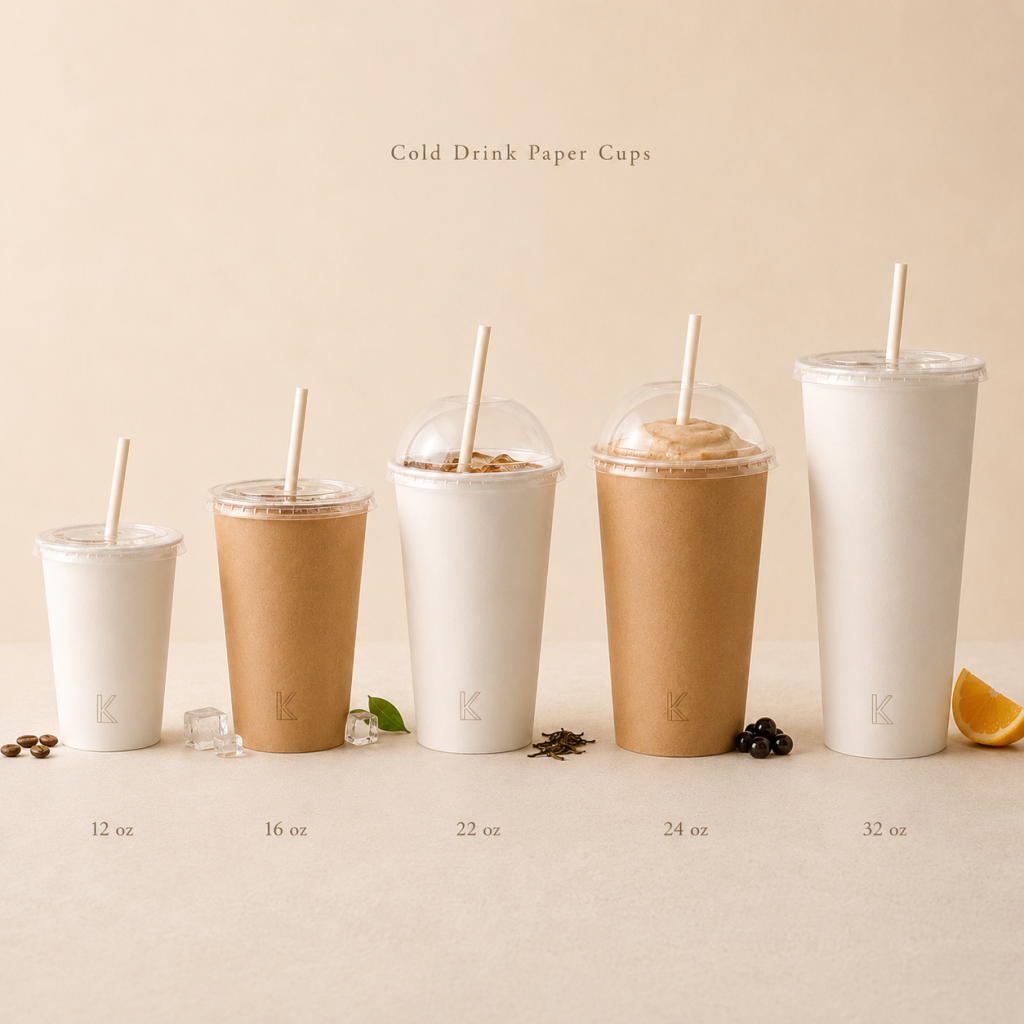
Cold drinks often require larger cups because ice, fruit, foam and toppings take up additional space.
12 oz
A 12 oz cold cup is suitable for small iced coffee, cold brew, juice and iced tea.
16 oz
The 16 oz size is one of the most versatile options for iced coffee, iced tea, lemonade and other regular cold beverages.
20 oz to 24 oz
These larger sizes are commonly used for smoothies, milkshakes, bubble tea and drinks with toppings.
Bubble tea cup sizes vary by market and brand. Many shops use cups between 16 oz and 24 oz, depending on the amount of ice, pearls and other ingredients.
32 oz
A 32 oz cup is mainly used for extra-large cold drinks, self-service beverages, cinemas, stadiums, festivals and other high-volume environments.
How to Choose the Correct Lid
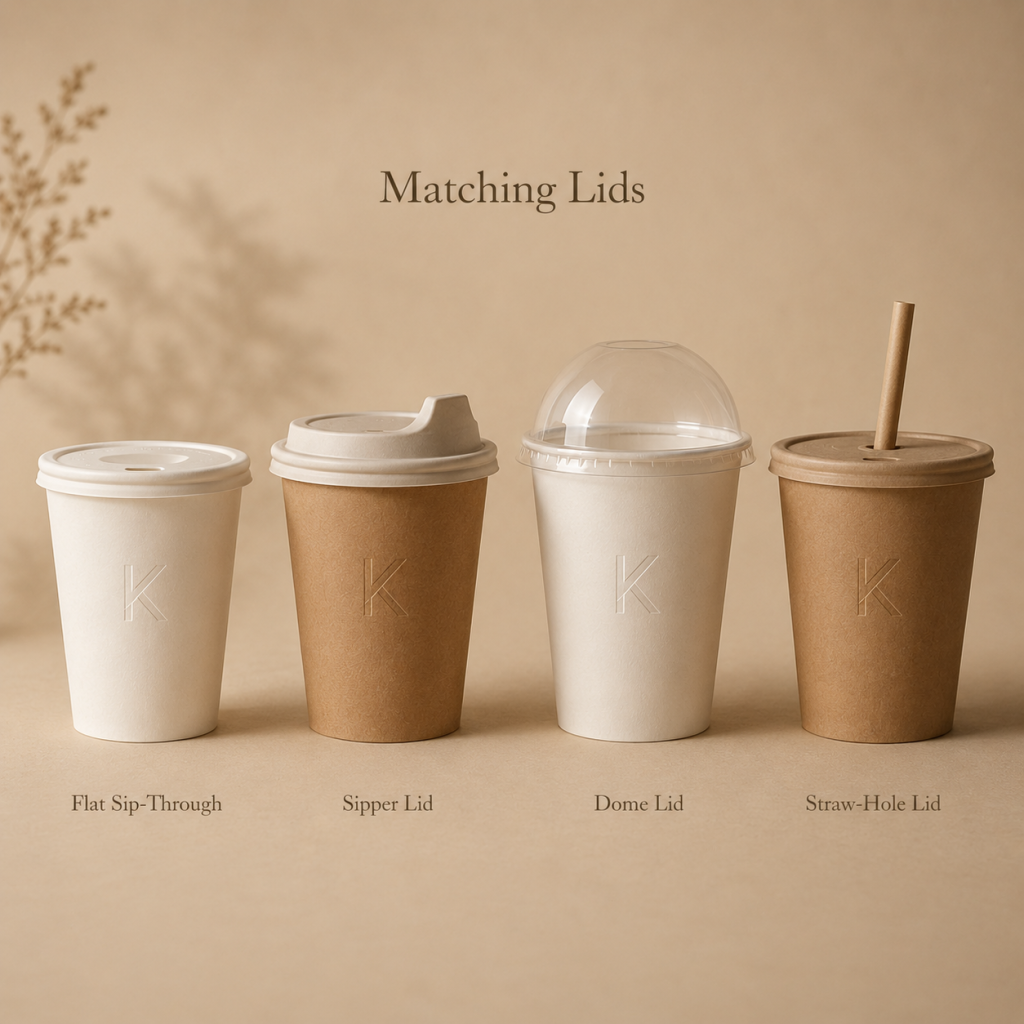
Cup lids should not be selected by ounce size alone.
Two paper cups can both be labelled 12 oz but have different rim diameters. As a result, a lid designed for one 12 oz cup may not fit another.
Before ordering cups and lids, always confirm:
- The outer rim diameter of the cup
- The matching lid diameter
- Whether the lid is designed for hot or cold drinks
- Whether a flat, sip-through, straw-hole or dome lid is required
Some cup ranges use the same rim diameter across several capacities. This can help cafés and restaurants reduce the number of lid types they need to store. However, compatibility should always be confirmed with the supplier.
Which Paper Cup Sizes Should You Choose?
The best size combination depends on the drinks being served.
Coffee shops:
8 oz and 12 oz are a practical starting combination. Add 4 oz for espresso and 16 oz for large drinks.
Restaurants and takeaway businesses:
12 oz and 16 oz cover many standard hot and cold beverages. A larger 20 oz or 24 oz cup can be added for cold drinks.
Bubble tea and smoothie shops:
16 oz, 20 oz, 22 oz and 24 oz are common options. The right choice depends on portion size and toppings.
Hotels and catering businesses:
4 oz cups are useful for samples and small servings, while 8 oz and 12 oz cups work well for coffee service and takeaway drinks.
Frequently Asked Questions
What is the most common paper cup size for coffee?
The 8 oz and 12 oz sizes are common choices for coffee shops. An 8 oz cup is suitable for cappuccino and small latte, while a 12 oz cup works well for regular coffee, latte, tea and Americano.
Are paper cup sizes the same between manufacturers?
Not always. Cups with the same ounce capacity may have different heights, shapes and rim diameters. Always check the supplier’s specification sheet before ordering.
Do all 12 oz paper cups use the same lid?
No. Lid compatibility depends on rim diameter rather than ounce capacity. Always match the lid diameter to the cup’s outer rim measurement.
What paper cup size is best for bubble tea?
Bubble tea is commonly served in cups between 16 oz and 24 oz. The ideal size depends on the amount of liquid, ice, pearls and toppings.
Final Thoughts
Understanding paper cup sizes helps cafés, restaurants, hotels and beverage brands choose cups that suit their drinks, portions and customer preferences.
The ounce capacity is a useful starting point, but rim diameter, cup construction and lid compatibility are equally important.
Karde Food Packaging manufactures paper cups in a wide range of sizes for hot and cold beverages. Custom printing, matching lids and flexible size combinations are available for different food-service applications.
Need help choosing the right paper cup size? Contact us for a size chart, samples and a customised quotation.