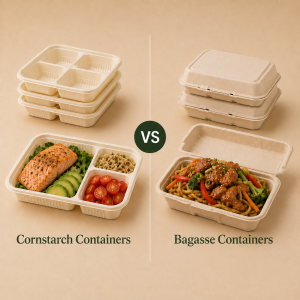
Bagasse plates and bagasse trays may use a similar molded-fiber material, but they do not serve food in the same way. A round plate is designed mainly for individual eating and centred food presentation. A tray provides a wider rectangular or divided layout that can make sandwiches, pastries, side dishes and combination meals easier to arrange.
The better option therefore depends less on the material and more on the menu. Food shape, portion size, number of meal components, serving method and transport requirements should all be considered before choosing between a bagasse plate and a bagasse tray.
What Is the Main Difference Between a Bagasse Plate and a Tray?
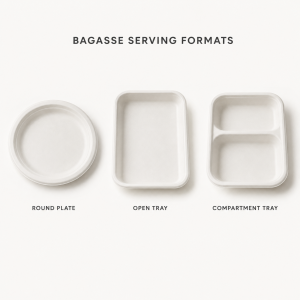
A bagasse plate normally has a round, open serving area suited to desserts, snacks, appetizers and individual meals. A bagasse tray may have a shallow rectangular shape for organized food presentation or a compartment layout for separating several meal components.
Karde’s plate range includes 6, 7 and 8 inch formats, while the tray category contains open trays such as the 7 Inch, 8 Inch, 8 × 6 Inch and 9 × 6 Inch Bagasse Food Trays. It also includes 400ml and 600ml trays and larger divided formats such as the 1000ml and 1100ml Two Compartment Bagasse Food Trays.
| Comparison factor | Bagasse plate | Bagasse tray |
|---|---|---|
| Common shape | Round | Rectangular or compartmented |
| Main measurement | Diameter | Length, width, depth or capacity |
| Food arrangement | Centred around the plate | Arranged along the tray or separated |
| Typical use | Desserts, light meals, individual dining | Sandwiches, bakery items, catering and meal sets |
| Eating style | Convenient for direct dining | Useful for display, preparation or organized serving |
| Food separation | Open surface | Open or divided formats available |
| Best choice depends on | Portion size and presentation | Food shape and number of components |
There is no universal winner. The most suitable product is the one whose usable surface and structure match the actual meal.
When Does a Bagasse Plate Fit the Menu Better?
Bagasse plates are usually the first products to evaluate when customers will eat directly from the package. The round shape is familiar, easy to place on dining tables and suitable for food arranged around a central point.
Desserts and small portions
A 6 Inch Bagasse Plate is a practical choice for:
- Cake slices
- Pastries
- Fruit
- Cookies
- Small snacks
- Food samples
- Individual appetizers
A compact plate prevents a small dessert from appearing lost on an oversized surface. It is suitable for bakeries, cafés, tea breaks, tasting events and dessert tables.
Breakfast and light meals
A 7 Inch Bagasse Plate provides more room for combinations such as:
- Sandwiches with fruit
- Pastries and eggs
- Small salads
- Appetizer selections
- Light pasta portions
- Children’s meals
It works as a middle option when a 6 inch plate feels crowded but a full-sized meal plate would create unnecessary empty space.
Complete individual meals
An 8 Inch Bagasse Plate is better suited to food containing several components, such as:
- Rice with meat and vegetables
- Pasta with a side
- Grilled food and salad
- Breakfast combinations
- Buffet lunch portions
The round surface allows the main food and sides to be arranged as one complete meal. Plates are therefore particularly useful for buffets, corporate catering, cafeterias and events where each guest carries an individual serving.
When Does an Open Bagasse Tray Fit Better?
An open rectangular tray becomes useful when the shape of the food does not naturally fit a round plate.
The Karde tray category includes the 7 Inch Bagasse Food Tray, 8 Inch Bagasse Food Tray, 8 × 6 Inch Bagasse Food Tray and 9 × 6 Inch Bagasse Food Tray, giving buyers several rectangular formats rather than only one standard size.
Sandwiches, rolls and bakery products
Long foods often have to be positioned diagonally on a round plate. A rectangular tray allows them to follow the length of the package.
Suitable examples include:
- Sandwiches
- Bread rolls
- Croissants
- Cake bars
- Pastry combinations
- Cookies arranged in rows
The 8 Inch Bagasse Food Tray measures approximately 7.6 × 5.7 × 1.1 inches and is presented for snacks, salads, fruit, bakery products, appetizers, sandwiches and light meals. Its shallow rectangular surface provides more organized presentation space than a small round plate.
Salads, fruit and deli food
Open trays can also work for small salads, fruit portions, vegetables and deli selections. Their straight sides make it easier to arrange ingredients in rows or separate visual groups without adding fixed dividers.
The 8 inch tray has a height of approximately 1.1 inches, so it is better suited to dry and semi-moist foods than soup or liquid-heavy recipes. Its listed applications include salads, roasted vegetables, prepared side dishes and supermarket displays.
Catering and display tables
A tray may fit the menu better when food is prepared for:
- Catering displays
- Bakery counters
- Supermarket deli areas
- Appetizer stations
- Food sampling
- Pre-arranged snack combinations
Rectangular trays can be placed in straight rows along a counter or buffet table, while round plates are usually more closely associated with individual dining.
When Should You Choose a Compartment Bagasse Tray?
Some menus need more than a larger open surface. They require physical separation between foods.
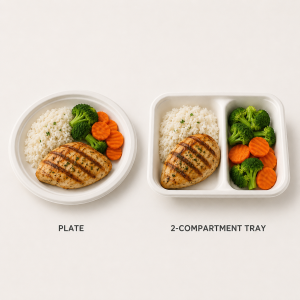
Karde’s tray category includes a 1000ml Two Compartment Bagasse Food Tray, an 1100ml Two Compartment Bagasse Food Tray, a 900ml Three-Compartment Bagasse Food Container and a 900ml Four-Compartment Bagasse Food Container.
These formats are more appropriate for:
- Rice with a main dish
- Meat with vegetables
- Breakfast sets
- Meal-prep combinations
- Main courses with two or three sides
- Catering portions
- Ready-to-eat meal sets
A round plate allows foods to touch and mix freely. A compartment tray provides built-in sections that help maintain a more organized presentation.
Choose an open plate when mixing is acceptable and direct dining is the priority. Choose a divided tray when food separation is an essential part of the menu.
How Does the Same Menu Look on a Plate and Tray?
Testing the same food in both formats is the best way to understand the difference.
One cake slice
A cake slice usually looks more balanced in the centre of a 6 inch plate. Placing one small slice in a long tray may leave unnecessary unused space.
Better starting option: 6 Inch Bagasse Plate.
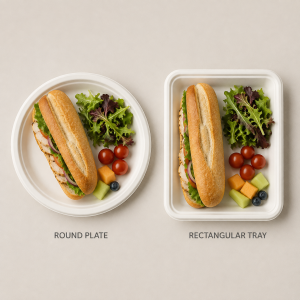
A sandwich with salad and fruit
A round plate creates a traditional individual-lunch presentation. A rectangular tray allows the sandwich to follow one side while the salad and fruit are placed beside it.
Better option: Plate for direct dining; tray for organized takeaway or display.
Rice, protein and vegetables
An 8 inch plate presents the food as one complete meal. A divided tray can separate the rice, protein and vegetables so that textures and sauces remain more distinct.
Better option: Plate for buffet dining; compartment tray for organized meal sets.
Three bakery products
Several pastries can look crowded when grouped around the centre of a small plate. An 8 × 6 Inch or 9 × 6 Inch Bagasse Food Tray provides a longer surface for arranging the items in a row.
Better starting option: Rectangular bagasse tray.
Does Tray Depth Make a Difference?
Shape is important, but depth should also influence the decision.
A plate is normally shallow and designed for foods that remain stable on an open surface. A tray may provide a higher sidewall, helping contain fruit, salad, small food pieces and modest amounts of dressing.
However, an open tray is still not the same as a bowl or deep food container. Thin soups, liquid-heavy curries and meals requiring secure delivery should be packed in a deeper or closable product.
The tray should also be tested with the intended food temperature and holding time. The 8 inch tray product page specifically recommends application testing before large-volume orders, especially for transport and semi-moist foods.
Which Product Fits Different Food-Service Settings?
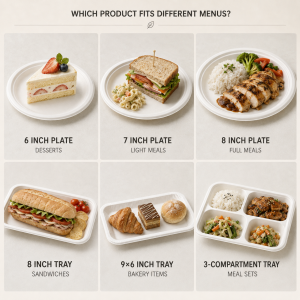
| Food-service setting | Product to test first |
|---|---|
| Bakery or café dessert | 6 Inch Bagasse Plate |
| Breakfast or light lunch | 7 Inch Bagasse Plate |
| Buffet main meal | 8 Inch Bagasse Plate |
| Sandwich and side items | 8 Inch Bagasse Food Tray |
| Multiple pastries | 8 × 6 or 9 × 6 Inch Bagasse Food Tray |
| Small salad or deli display | 400ml, 600ml or 8 Inch Bagasse Food Tray |
| Rice with one side | Two Compartment Bagasse Food Tray |
| Meal with several sides | Three- or Four-Compartment format |
| Food sampling | Small plate or 7 Inch Bagasse Food Tray |
| Supermarket prepared food | Tray selected according to portion and covering system |
What Should Wholesale Buyers Compare?
Before placing a bulk order, buyers should check:
- The actual usable serving area
- Product depth and sidewall height
- Whether the meal needs compartments
- Food shape and portion weight
- Direct dining or takeaway use
- Required covering or outer packaging
- Pieces per carton
- Carton dimensions and warehouse space
- Stacking efficiency
- Performance with the real menu
For example, the 8 Inch Bagasse Food Tray is packed 1,000 pieces per export carton, with listed carton dimensions of 47.5 × 40 × 31.5cm. These details can influence shipping and warehouse planning even when two products appear similar at the serving stage.
Frequently Asked Questions
Is a bagasse tray the same as a bagasse plate?
No. A plate is normally round and intended for individual serving, while a tray may be rectangular or divided to provide a different food arrangement.
Is a tray better for sandwiches?
Rectangular trays are often easier to evaluate for long sandwiches, rolls and bakery products because the food can follow the length of the tray.
Is a plate better for full meals?
An 8 inch plate works well for many individual meals. A compartment tray may be preferable when the meal components need to stay separated.
Can bagasse trays hold salad?
The 8 inch tray is listed for small salads, vegetables and semi-moist foods, but buyers should test the amount of dressing, holding time and transport conditions.
Which tray should be used for combination meals?
The tray category includes two-, three- and four-compartment products for meals containing multiple components.
Can plates or open trays be used for soup?
Neither is the first choice for thin soup. A deeper bowl or closable food container would usually be more suitable.
Conclusion
A bagasse plate is generally the better starting point for desserts, appetizers, buffet meals and food that customers will eat directly from the package. A bagasse tray fits menus that need rectangular presentation, higher sides, multiple bakery items or clearly separated meal components.
The decision should not be based on shape alone. Buyers should compare usable area, depth, food arrangement, service method, carton packing and transport requirements.
For a diverse menu, the most practical product range may include both: 6, 7 and 8 inch plates for individual service, open trays for sandwiches and displays, and compartment trays for organized takeaway meals.